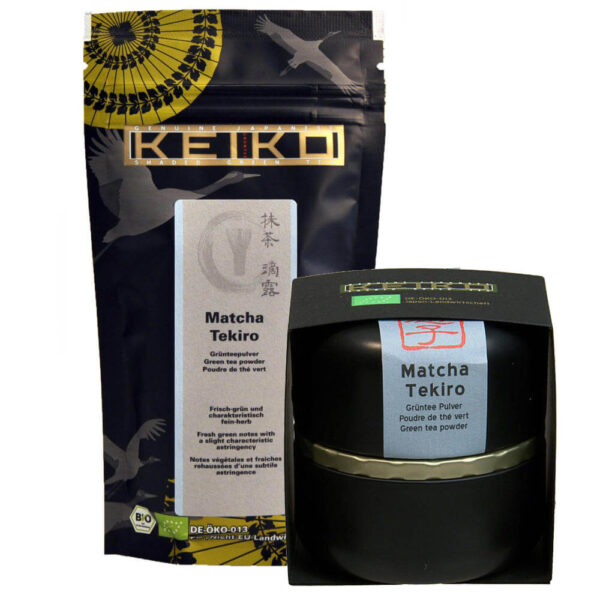
KEIKO combines Japanese organic tea cultivation with fresh grinding in Germany. The tencha comes from Kagoshima and is gently processed into matcha in Diepholz using Japanese granite stone mills. The selection includes classic matchas, fine blends, and green tea powders for pure enjoyment, lattes, cooking, and creative recipes. Below the products, you can learn more about KEIKO, the unique aspects of the grinding process, and the best ways to use them.
Organic Matcha from KEIKO made from Japanese Tencha
KEIKO stands for Japanese organic green tea with exceptional freshness, transparent sourcing, and a unique combination of Japanese tea cultivation and German grinding. The tea leaves come from Kagoshima in southern Japan, where they are organically grown and processed into Tencha. In Diepholz, this tencha is freshly ground into fine matcha as needed using Japanese granite stone mills.
At Matchashop, you’ll find select matchas, matcha blends, and green tea powders from KEIKO. The selection ranges from classic organic matchas for pure enjoyment to creamy latte blends and robust kabuse powders for cooking, shakes, and creative recipes.
Organic Pioneering Spirit Since 1992
The story of KEIKO begins with a bowl of Japanese green tea that Markus Hastenpflug tasted in Germany in the early 1990s. The color, aroma, and flavor were so unusual and vibrant at the time that they led to a long-standing partnership with Japanese tea farmers.
It was clear from the start: KEIKO would be organic tea from Japan. As early as 1992, the first organically certified teas made their way to Germany. The brand is named after Keiko Shimodozono, who played a key role in the transition to organic tea cultivation.
Today, organic farming, transparent quality control, and sustainable partnerships are at the heart of the brand. This aligns perfectly with our mission at Matchashop: to make exceptional teas accessible without simplifying them.
Kagoshima: The Place of Origin
KEIKO teas come from Kawanabe in Kagoshima, a tea-growing region in southern Japan with fertile soil, a mild climate, and ideal conditions for robust, aromatic green teas. Various tea bush varieties are grown on the company’s own organic farm and by long-standing contract farmers, including 14 selected cultivars and Zairai mixed cultivars.
This diversity is important because each cultivar brings its own unique aroma. Some leaves have a fresh, grassy flavor, while others are nutty, mellow, deep, or particularly rich in umami. This range gives rise to teas that not only look green but also exhibit clearly distinguishable characteristics.
Freshly ground in Diepholz
A distinctive feature of KEIKO is that it is freshly ground in Germany. The Japanese tencha is not transported over long distances as ready-made matcha, but is slowly and gently ground in Diepholz using Japanese granite stone mills.
This is a subtle quality advantage. Matcha is sensitive to light, air, heat, and moisture. The fresher the powder is enjoyed after grinding, the more vibrant its color, aroma, and flavor will be. This is exactly where KEIKO comes in: fresh grinding, controlled storage, and a fine powder that dissolves easily.
Classic Matchas for Pure Enjoyment
The classic KEIKO matchas in this category are made from fully shaded organic tencha. Shading promotes an intense green color, delicate amino acids, and a softer flavor profile with less bitterness. Depending on the variety, they exhibit different nuances ranging from fresh and grassy to creamy, nutty, and deep.
Matcha Premium is well-rounded, slightly nutty, and balanced between a delicate astringency and natural sweetness. A wonderful choice for the classic, thin-consistency preparation.
Matcha Tekiro has a fresh green flavor, is delicately astringent, slightly grassy, and subtly fruity. Its jade-green foam makes it particularly appealing for usucha.
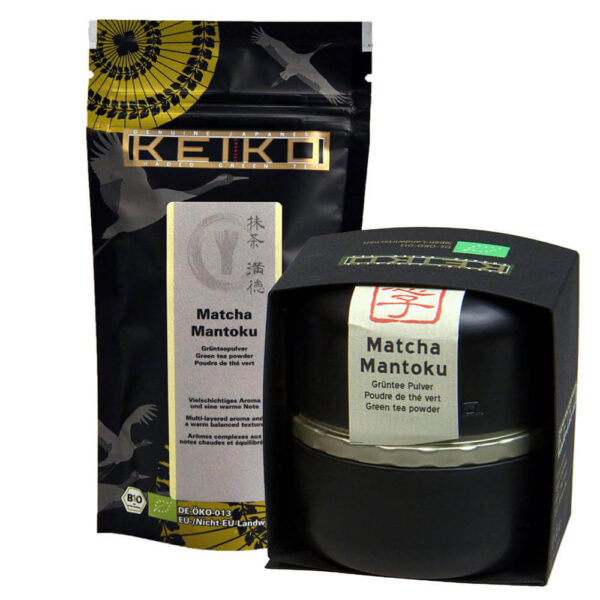
Matcha Mantoku is a complex rarity with a warm, velvety, nutty flavor and very low bitterness. It is suitable for both usucha and a thicker preparation.
Matcha Supreme is the mildest classic KEIKO Matcha in this selection. It features an intense green color, a creamy, smooth aroma, and a long, mild aftertaste. It can also be used to make Koicha.
Matcha Blends for Lattes and Creative Ideas
In addition to classic matchas, KEIKO offers fine organic blends with natural ingredients. They are designed to easily incorporate matcha into modern rituals: as a latte, in desserts, shakes, sweet treats, or baked goods.
Matcha Roasty Rebel combines Japanese matcha with genmai, or roasted rice. This creates a gentle roasted aroma that pairs especially well with matcha lattes, pastries, and creamy recipes.
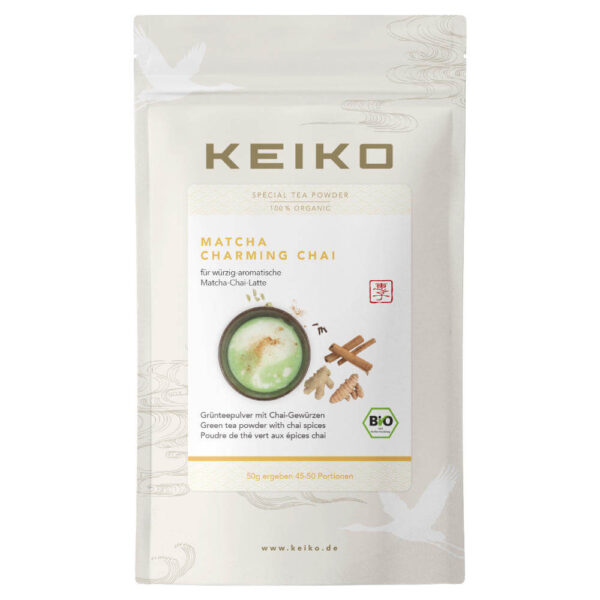
Matcha Charming Chai combines matcha with aromatic chai spices and mulberry leaf powder. The blend is designed for spicy matcha latte moments and contains no added sugar or milk powder.
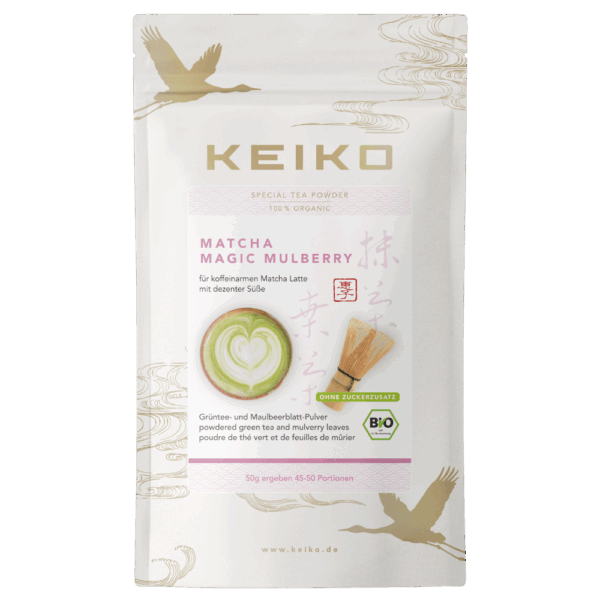
Matcha Magic Mulberry combines matcha with mulberry leaf powder. The blend is mild, subtly sweet, and lower in caffeine than pure matcha.
These blends are ideal if you want to enjoy matcha in a less purist and slightly more playful way. They remain green, Japanese, and pure, but add a little flavor-filled twist to your everyday life. After all, sometimes indulgence can be downright friendly.
Kabuse Powder and Benifuuki for Robust Green Cuisine
In addition to traditional matcha, KEIKO also offers ground green teas from semi-shaded cultivation. Kabuse powder is made from the whole leaf and therefore contains more robust leaf components than classic tencha matcha. The flavor is more intense, astringent, and very pronounced.
Kabuse Powder No. 1 is a robust organic semi-shade tea powder from Kagoshima. It’s particularly well-suited for milkshakes, ice cream, cocktails, baked goods, and recipes where the green tea flavor should remain distinctly noticeable.
Kabusepulver No. 2 is also a versatile organic semi-shade tea powder with a strong aroma. It adds color and character to creative preparations.
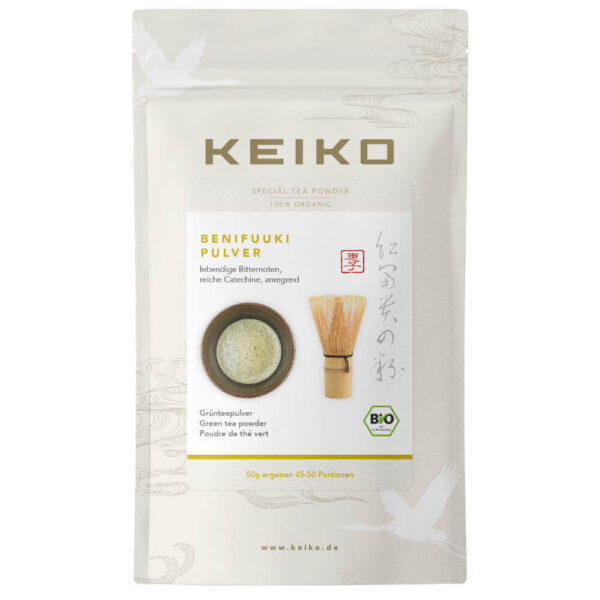
Benifuuki Powder is an organic tea powder made from the Benifuuki cultivar. It has a robust, tart, floral aroma and is intended more for mindful tea moments and functional green tea rituals than for the classic matcha ceremony.
Important to know: Kabuse powder and Benifuuki powder are not classic matchas made from tencha.
However, they belong in this category because, like matcha, they are used as a fine green powder and open up many creative possibilities.
Who KEIKO Matcha Is Right For
KEIKO is perfect for tea lovers who value organic quality, freshness, and clean processing. The classic matchas are ideal for enjoying on their own with water, especially if you’re looking for vibrant color, a fine foam, and a distinct flavor profile.
The blends are a great choice if you love matcha lattes or want to easily enhance green desserts, shakes, and recipes. The Kabuse and Benifuuki powders appeal to anyone seeking bold green tea flavors and who enjoys experimenting in the kitchen.
Matcha naturally contains caffeine and L-theanine. Many people find that this combination promotes an alert yet calm state of clarity. We’re being deliberately cautious here: Matcha is no substitute for sleep or a balanced diet, but it can be a lovely ritual for mindful breaks.
How to Prepare KEIKO Matcha
For a classic bowl, add one to one and a half grams of matcha to a preheated matcha bowl. Sift the powder through a fine sieve beforehand to ensure a particularly silky texture.
First, mix the matcha with a small amount of water to form a smooth paste. Then add about seventy to one hundred milliliters of warm water and whisk the tea with the chasen using quick, light strokes until a fine foam forms.
For classic KEIKO matcha, aim for a temperature of about eighty degrees. If you want to emphasize sweetness and umami more, the water can be slightly cooler. For latte blends, first stir the powder with a little water until smooth, then add warm milk or a plant-based milk.
Frequently Asked Questions About KEIKO Matcha
Is KEIKO Matcha organic?
Yes, the KEIKO products listed here are organic. KEIKO has been working with organic tea from Japan since 1992 and is committed to organic farming, transparent quality controls, and regular analyses.
Is KEIKO Matcha ground in Japan or Germany?
The tencha comes from Japan. The grinding into matcha takes place at KEIKO in Diepholz using Japanese granite stone mills. This ensures that the matcha is processed and bottled while exceptionally fresh.
Which KEIKO variety is right for me?
For classic, pure enjoyment, Premium, Tekiro, Mantoku, and Supreme are ideal. Supreme is a great choice for particularly mild and creamy bowls. Roasty Rebel, Charming Chai, and Magic Mulberry are ideal for lattes and sweeter preparations. Kabuse Powder No. 1, Kabuse Powder No. 2, and Benifuuki Powder are excellent choices for cooking, shakes, and robust green tea recipes.
What’s the difference between matcha and kabuse powder?
Classic matcha is made from tencha. In this process, the tender leaf tissue is separated from the leaf veins and then finely ground. Kabuse powder is ground from the whole semi-shaded tea leaf. It has a stronger flavor and is particularly well-suited for recipes, lattes, shakes, and ice cream.
Can I prepare KEIKO Matcha cold?
Yes. Many KEIKO Matcha varieties are also suitable for cold preparations. First, stir the powder with a little water until smooth, then top it off with cold water or a plant-based milk. A fine crema forms particularly quickly in a shaker.
What’s the best way to store KEIKO Matcha?
Matcha retains its aroma best when stored in a tightly sealed container in a cool, dry, and dark place. Once opened, you should enjoy it as soon as possible to preserve its vibrant color, aroma, and flavor.
Discover organic matcha from KEIKO and find your perfect blend for pure enjoyment, creamy latte moments, and creative green rituals.