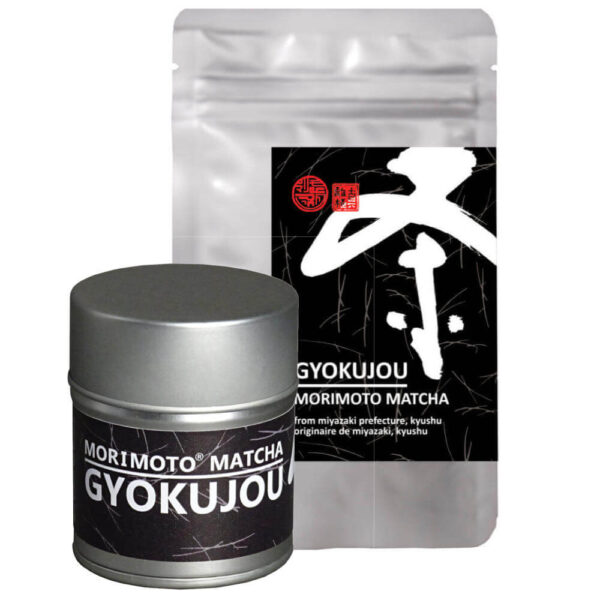
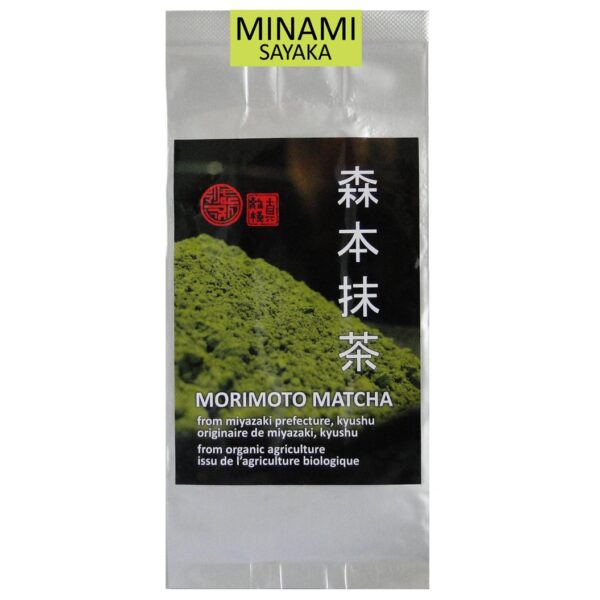
The Morimoto family’s matcha comes from Miyazaki in southern Japan and embodies decades of organic expertise, artisanal precision, and an extraordinary variety of tea plant cultivars. Each variety showcases a unique facet of the family’s tea garden, ranging from crisp freshness to subtle sweetness to deep umami. This selection is perfect for anyone who wants to discover Japanese organic matcha with transparent origins and a mellow character. You can find out more about the Morimoto family, the tea garden’s unique features, and the best way to prepare it below the products.
Organic Matcha from the Morimoto Family in Miyazaki
In southern Japan, not far from the city of Miyazaki, Haruyo and Shigeru Morimoto tend a tea garden that embodies tranquility, expertise, and exceptional organic quality. Their matcha is not the result of chance, but of decades of careful observation: of the climate and soil, of tender shoots, and of every single tea bush variety.
At Matchashop, you’ll find select matcha varieties from the Morimoto family for pure enjoyment, matcha lattes, cold brews, and creative recipes. Clear in flavor, delicate in texture, and with that subtle freshness that makes fine Japanese teas so special.
A Tea Garden with a Pioneering Spirit
The Morimotos’ story begins in 1971, when Haruyo and Shigeru took over the small family business from Shigeru’s parents. Over the decades, what started as a single tea garden plot of about one hectare grew into a farm spanning approximately eight hectares across twelve different plots.
As early as 1977, the Morimotos began growing tea organically. At that time, organic farming was still considered a bold, almost inconvenient path in Japanese tea cultivation. For Haruyo and Shigeru, it was a decision made from the heart: they wanted to cultivate tea in harmony with nature, without chemical pesticides or synthetic fertilizers.
To this day, this philosophy shapes every tea from their garden. The Morimotos do not view their plants as raw materials, but as living counterparts. For them, the soil, microorganisms, insects, sun, rain, and wind are all part of a greater whole. You don’t taste this care loudly, but quietly: as purity, balance, and a pleasant depth.
From Leaf to Powder: A Family-Run Operation
What makes the Morimoto family’s teas so special is the close connection between cultivation, processing, and final preparation. The freshly harvested leaves are processed in their own production facility, just a few steps away from their home. Shigeru Morimoto oversees many steps of the process himself and has developed his own style over decades.
A particularly distinctive feature is the gentle final heating. It helps preserve the fresh, clear character of the teas and harmoniously rounds out the delicate aromas. The result is matcha that doesn’t feel overpowering, but remains precise, green, and vibrant.
For you, this means: You get matcha with traceable origins, carefully crafted by the family, and a quality that doesn’t rely on label hype. Good news for everyone who likes things straightforward.
Why diversity is so important here
The Morimotos work with various tea bush varieties. These include, among others, Oku Midori, Minami Sayaka, and Yabukita. Each variety brings its own characteristics: more sweetness, more umami, floral notes, crisp freshness, or a fuller body.
This diversity isn’t just exciting from a sensory perspective.
It also makes the tea garden more resilient, because different plants react differently to weather, light, and insects. Year after year, Haruyo and Shigeru reassess which areas should be shaded and which tea bushes should be allowed to grow in the open air.
Oku Midori is often characterized by a delicate sweetness, depth, and a rounded body.
Minami Sayaka offers an intense green color, fruity notes, and a delicate floral aroma.
Yabukita forms a harmonious, mild base and ensures balance.
Morimoto Matchas at Matchashop
The matchas in this category demonstrate just how varied the flavors of organic matcha from a single family-run garden can be. Sometimes classic and deep, sometimes floral and delicate, sometimes simple enough for everyday use or as a green ingredient in the kitchen.
Morimoto Matcha Gyokujou is made from particularly tender leaves of the Oku Midori variety. The bushes are shaded before harvest. The result is an elegant matcha with depth, gentle umami, and a subtle sweetness.
Morimoto Premium Matcha Minami Sayaka showcases the floral, fruity side of the Morimoto garden. The shaded leaves of the Minami Sayaka variety provide a vibrant green color, delicate sweetness, and an exceptionally fragrant character.
Morimoto Matcha is well-balanced, intensely green, and versatile. It pairs wonderfully with cold water, matcha lattes, shakes, and creative recipes.
For mindful rituals and intentional breaks
Matcha naturally contains caffeine and L-theanine. Many people appreciate this combination because they find the experience more alerting yet calmer than with coffee. Of course, your own experience is what matters most: Matcha isn’t a promise, but a refined tea ritual that can accompany you through your daily life.
When whisked with just water, Morimoto Matcha reveals its full depth. With milk or a plant-based beverage, it becomes creamy and approachable. Shaken cold, it brings freshness to warm days. And in recipes, it adds color, character, and a green accent that needs little explanation.
How to Prepare Morimoto Matcha
For a classic bowl, place about one gram of matcha in a matcha bowl, first stir it with a little warm water until smooth, and then whisk it with about seventy milliliters of water until frothy. Warm, not boiling, water at about seventy to eighty degrees is ideal.
For cold matcha, you can first stir the powder with a little water until smooth and then top it off with cold water or a plant-based milk. Give it a quick shake, marvel for a moment, then enjoy.
Frequently Asked Questions About Morimoto Matcha
Which Morimoto Matcha variety is right for me?
For pure enjoyment, we especially recommend Gyokujou and Premium Matcha Minami Sayaka. Morimoto Matcha is particularly versatile for lattes, cold drinks, and recipes.
What gives Morimoto Matcha its distinctive flavor?
The matcha is characterized by organic farming, careful shading, various tea bush varieties, and in-house processing at the family-run business. This results in clear, fresh, and subtly nuanced flavor profiles.
Is Morimoto Matcha organic?
Yes, the Morimoto Matcha varieties presented here are organically grown. The Morimoto family is among the early organic pioneers of Japanese tea cultivation.
Can I also use Morimoto Matcha for matcha lattes?
Yes. Varieties with a stronger, distinctly recognizable green tea character are particularly well-suited for matcha lattes. They retain their flavor even when mixed with milk or plant-based milk and have a pleasantly rounded taste.
Discover the Morimoto family’s matcha and find your perfect variety for clear, peaceful, green moments.